
How to Start Buying Silver in the UK in 2026
And what is actually tax-efficient
Silver is quietly becoming a serious consideration for UK buyers who want something tangible, finite, and independent of the financial system. In 2026, interest is less about speculation and more about ownership, resilience, and long-term thinking.
If you are based in the UK, buying silver comes with a few important rules, especially around tax. Getting these right from the start can make a meaningful difference over time.
Why people in the UK buy silver
Silver plays two roles at once. It is a precious metal held as a store of value, and it is an industrial metal used in solar energy, electronics, and medical technology. That dual demand is what makes silver particularly interesting.
For UK buyers, silver often sits alongside gold, cash savings, or property as a way to diversify outside traditional financial assets.
Step one: choose physical silver, not paper
If tax efficiency and real ownership matter to you, physical silver is the place to start.
Physical silver means:
- You own the metal outright
- There is no counterparty risk
- You are not relying on a fund, platform, or promise
Paper silver like ETFs or mining shares may suit traders, but they do not offer the same security or tax advantages available through certain UK coins.
Understanding UK tax on silver
This is the part most beginners miss.
VAT on silver
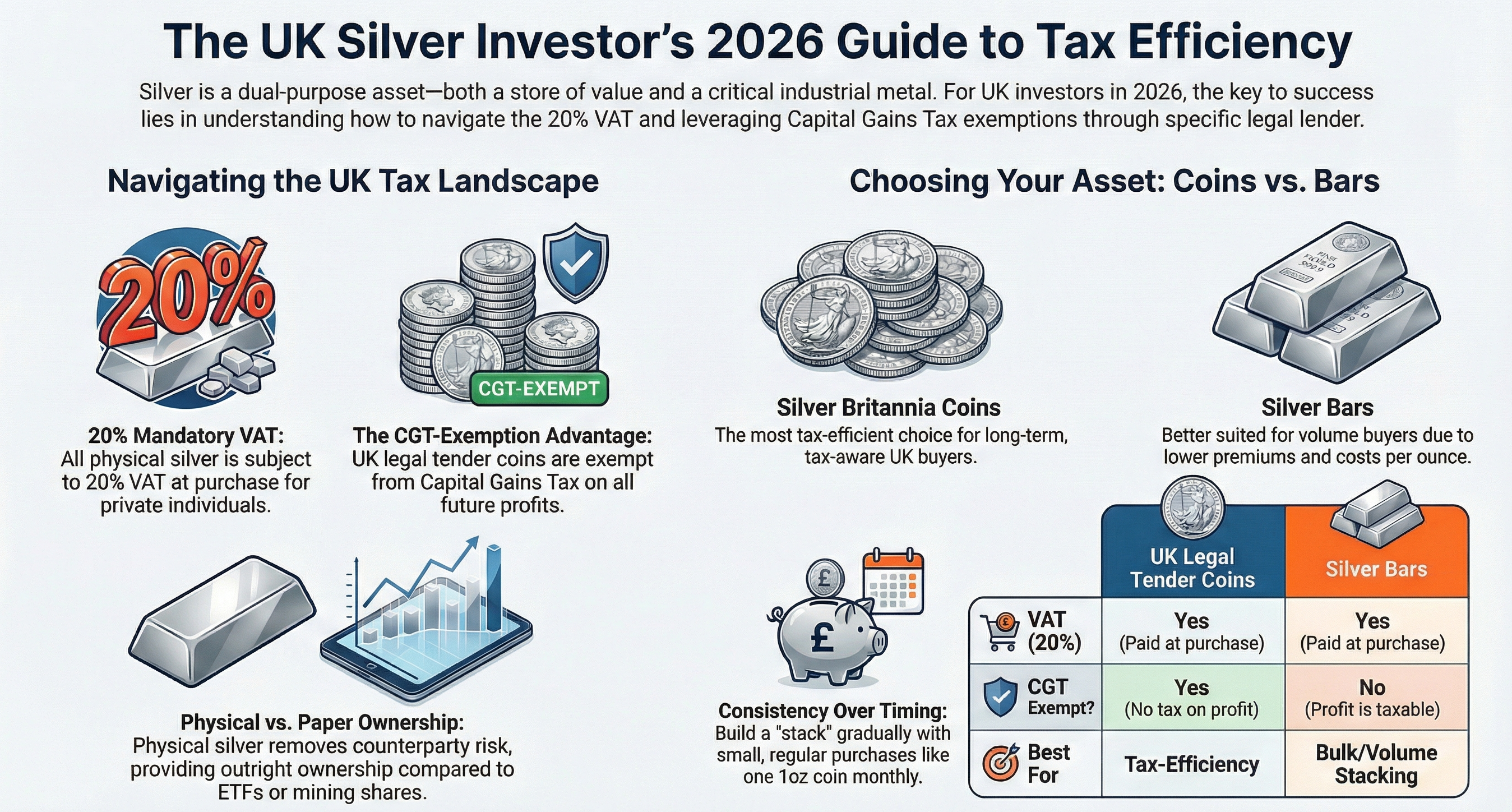
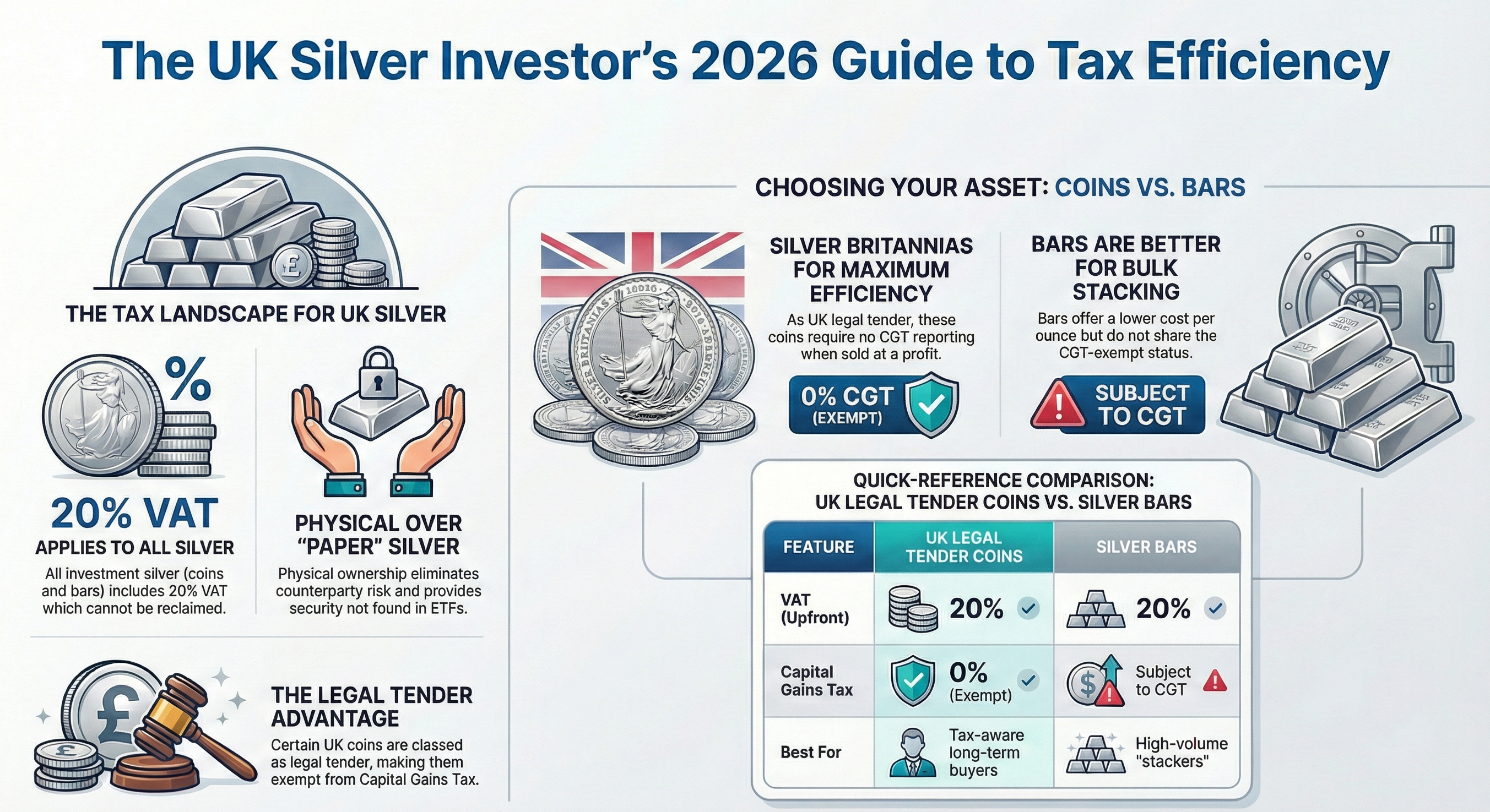
In the UK, all investment silver is subject to 20% VAT, whether you buy coins or bars. Unlike gold, there is no VAT exemption for silver when purchased normally and delivered to you.
This means:
- A £1,000 silver purchase becomes £1,200 at checkout
- VAT is paid upfront and cannot be reclaimed by private individuals
There is no legal way around VAT on physical silver in the UK unless you use specialist offshore or vaulted structures, which are generally suited to very large purchases.
Capital Gains Tax and why it matters
This is where tax efficiency does come into play.
When you sell silver in the UK, any profit may be subject to Capital Gains Tax. However, some silver coins are CGT-exempt.
The most tax-efficient way to buy silver in the UK
UK legal tender silver coins
The most tax-efficient silver for UK buyers is UK legal tender silver coins, particularly:
- Silver Britannia coins
These coins are classed as legal tender in the UK. That means:
- Any future gains are exempt from Capital Gains Tax
- There is no CGT reporting requirement when you sell
Silver Britannias are produced by The Royal Mint and are widely recognised, highly liquid, and easy to resell.
Important to note:
VAT still applies when you buy them, but CGT exemption can be extremely valuable if silver prices rise significantly over time.
Coins vs bars for UK buyers
Silver coins
- CGT-exempt if UK legal tender
- Easier to sell in small quantities
- Higher premiums than bars
- Best for long-term, tax-aware buyers
Silver bars
- Lower cost per ounce
- Not CGT-exempt
- Better suited to bulk stacking
- Simple and efficient for volume buyers
If tax efficiency is a priority, coins usually make more sense, even with the higher upfront premium.
How much should you start with
There is no minimum.
Many UK buyers begin with:
- One 1oz silver Britannia per month
- A small batch purchase a few times a year
Silver rewards consistency. Trying to time the market perfectly matters far less than building gradually.
Storage considerations
For smaller holdings, discreet home storage is common. As your silver stack grows, consider:
- A high-quality home safe
- Bank safety deposit boxes
- Insured private vaulting
Always keep invoices and documentation. They matter when it comes time to sell.
A long-term mindset for 2026 and beyond
Buying silver in the UK is not about chasing headlines. It is about owning something real, steadily, with intention. Understanding VAT upfront and choosing CGT-efficient formats can protect more of your upside over time.
Start small. Buy recognisable silver. Think in years, not months.
Disclaimer
This content is provided for general information and educational purposes only and does not constitute financial, investment, legal, or tax advice. The information shared reflects general principles and opinions and may not be suitable for your individual circumstances. Precious metals prices can fluctuate, and past performance is not indicative of future results. You should always carry out your own research and, where appropriate, seek advice from a qualified financial or tax professional before making any financial decisions.